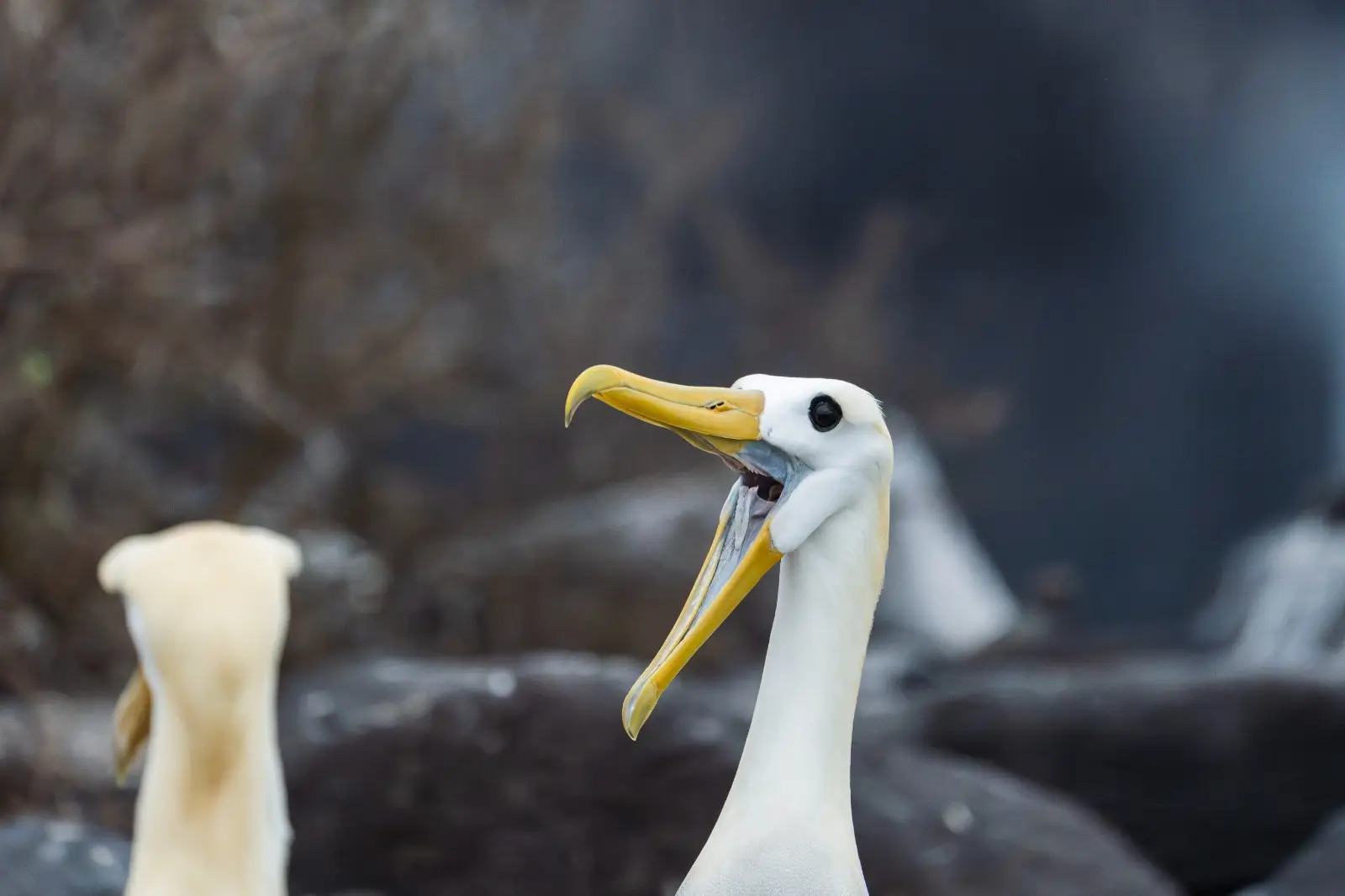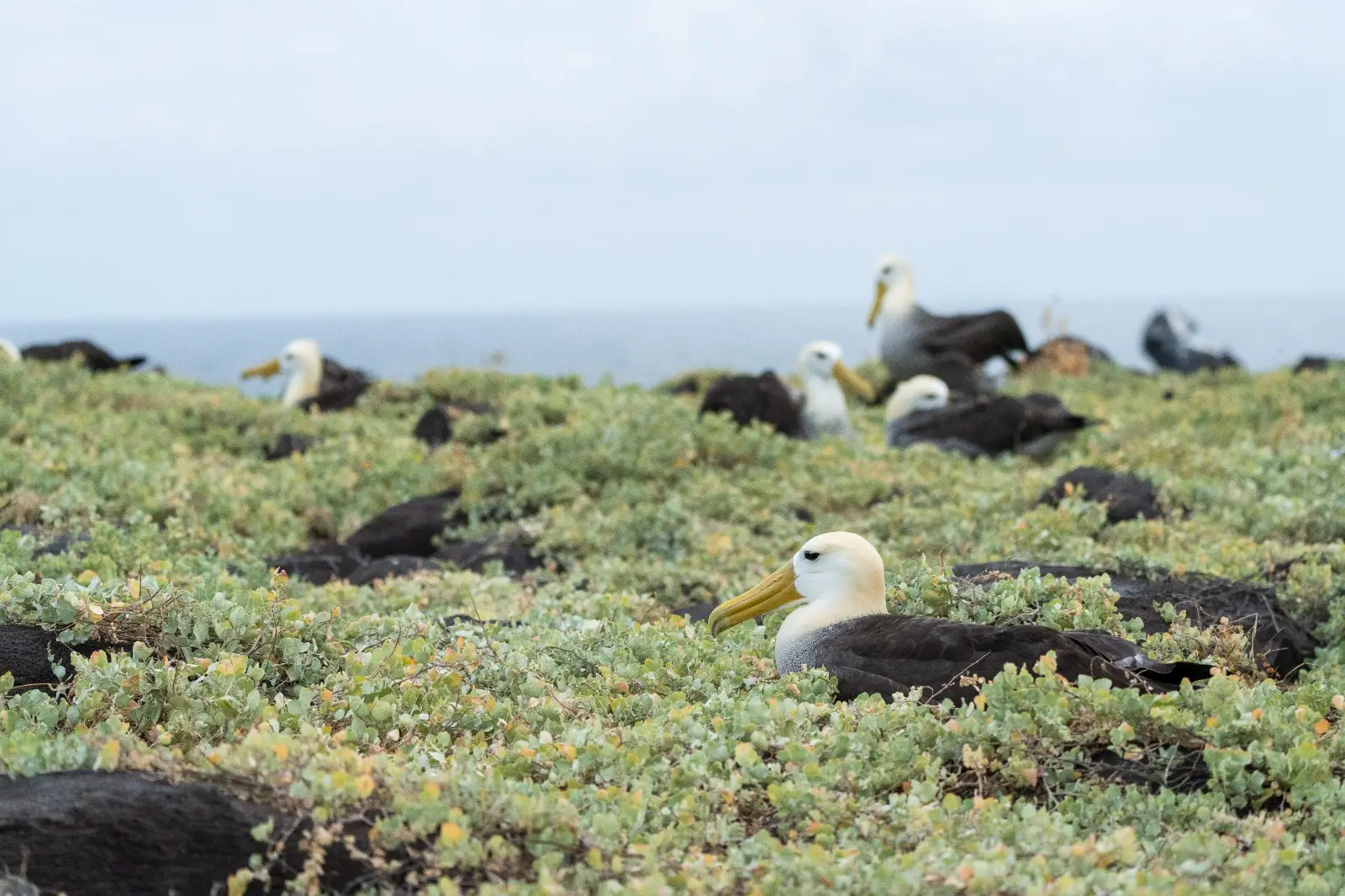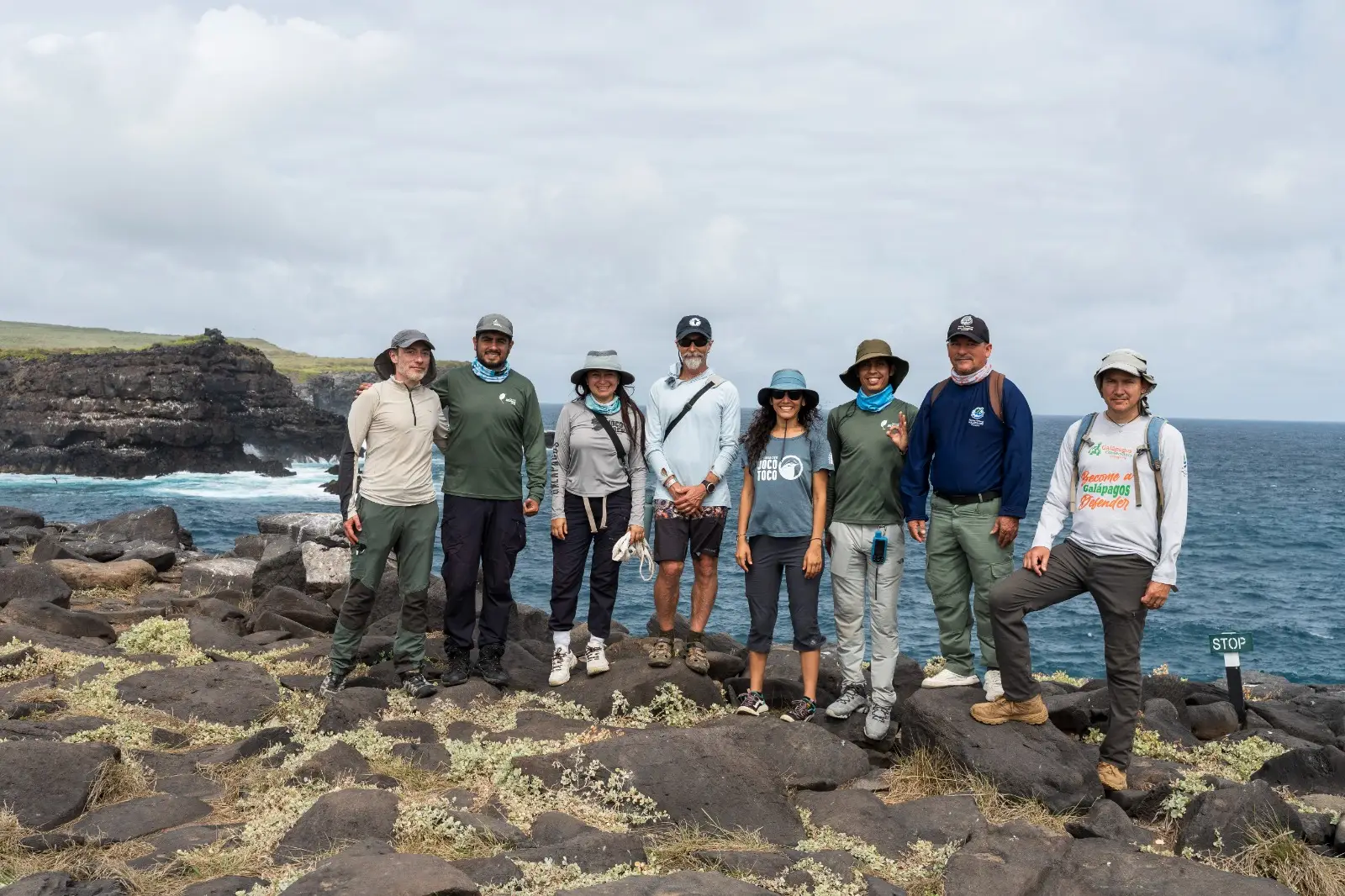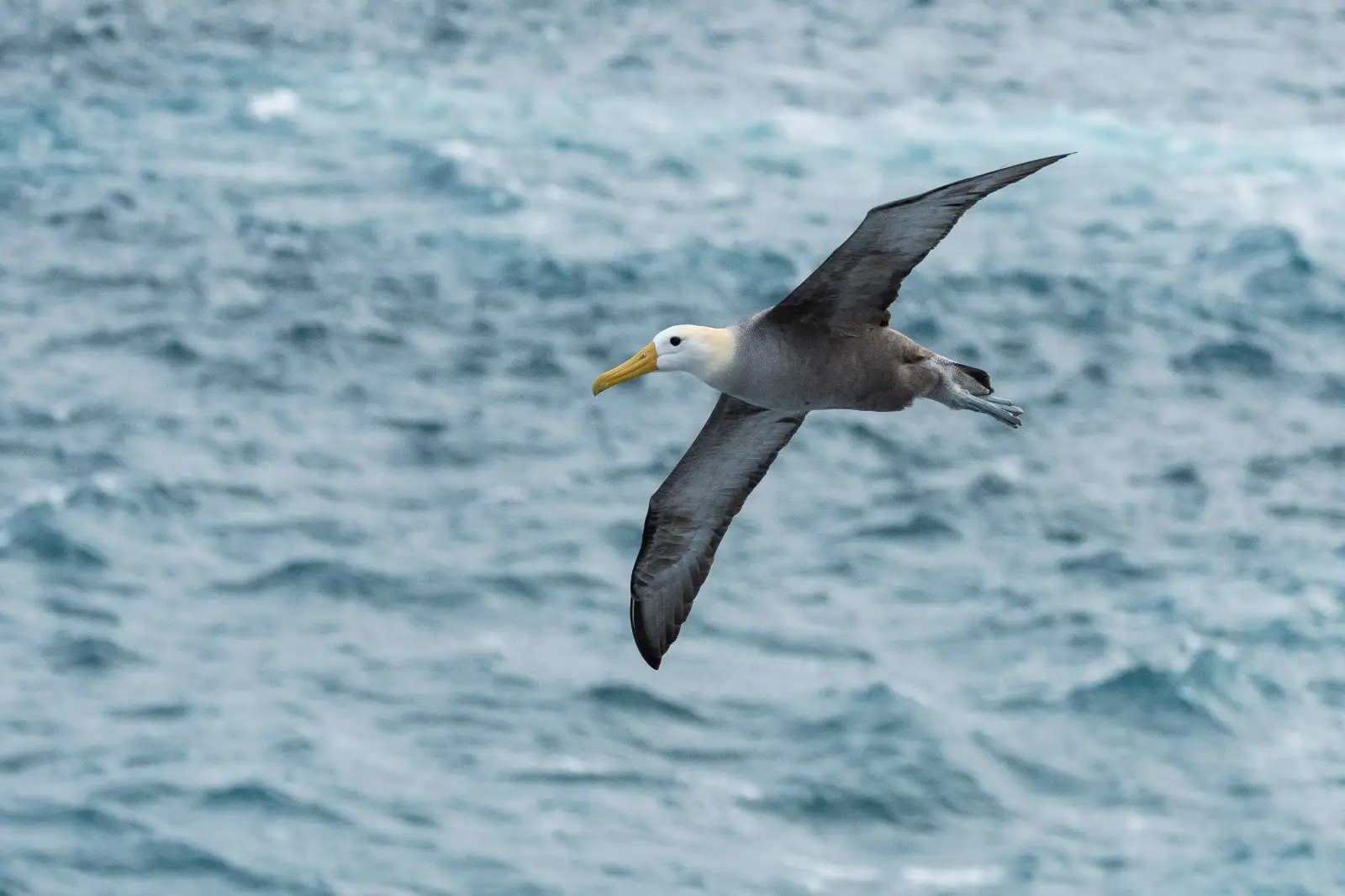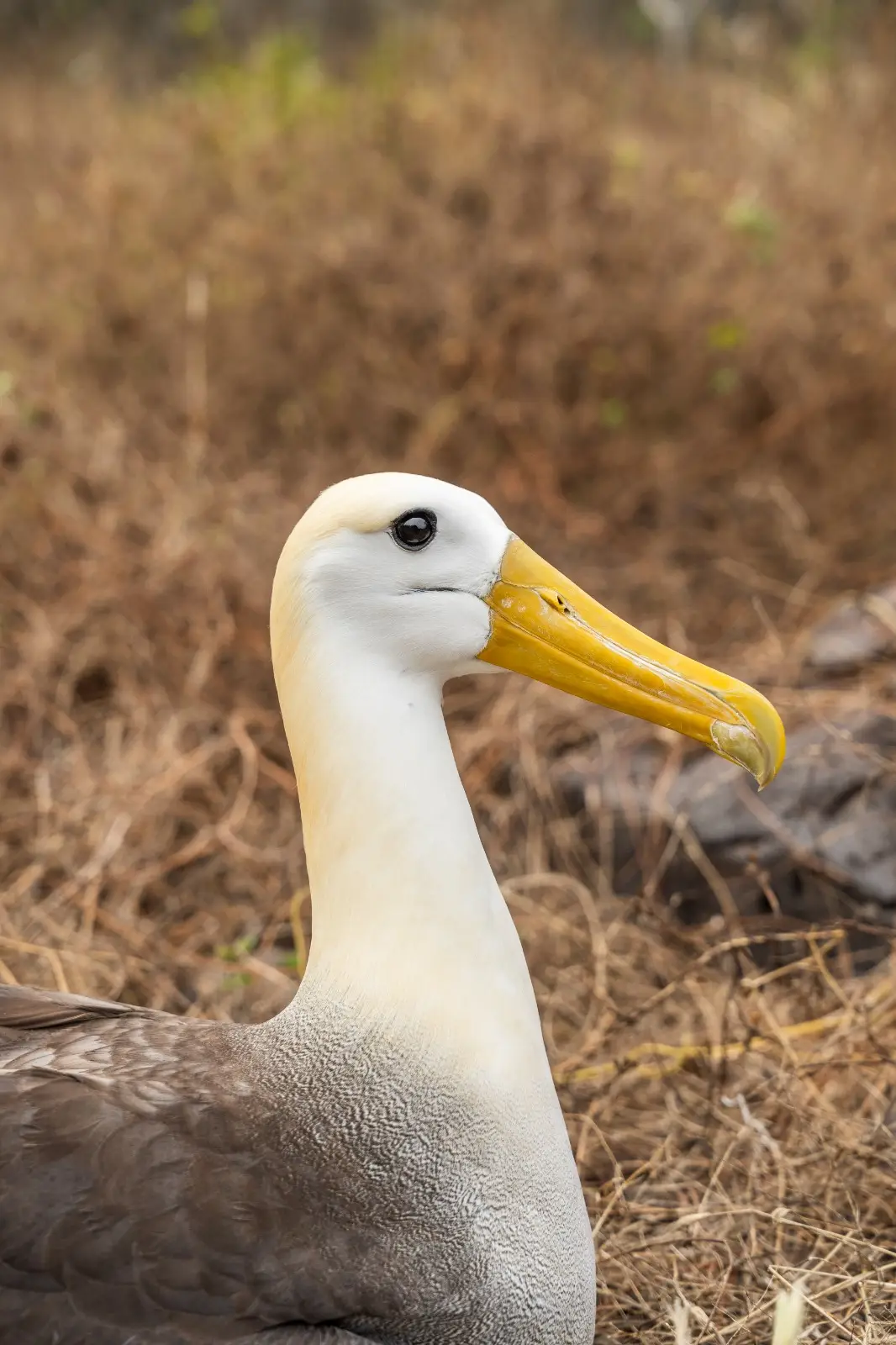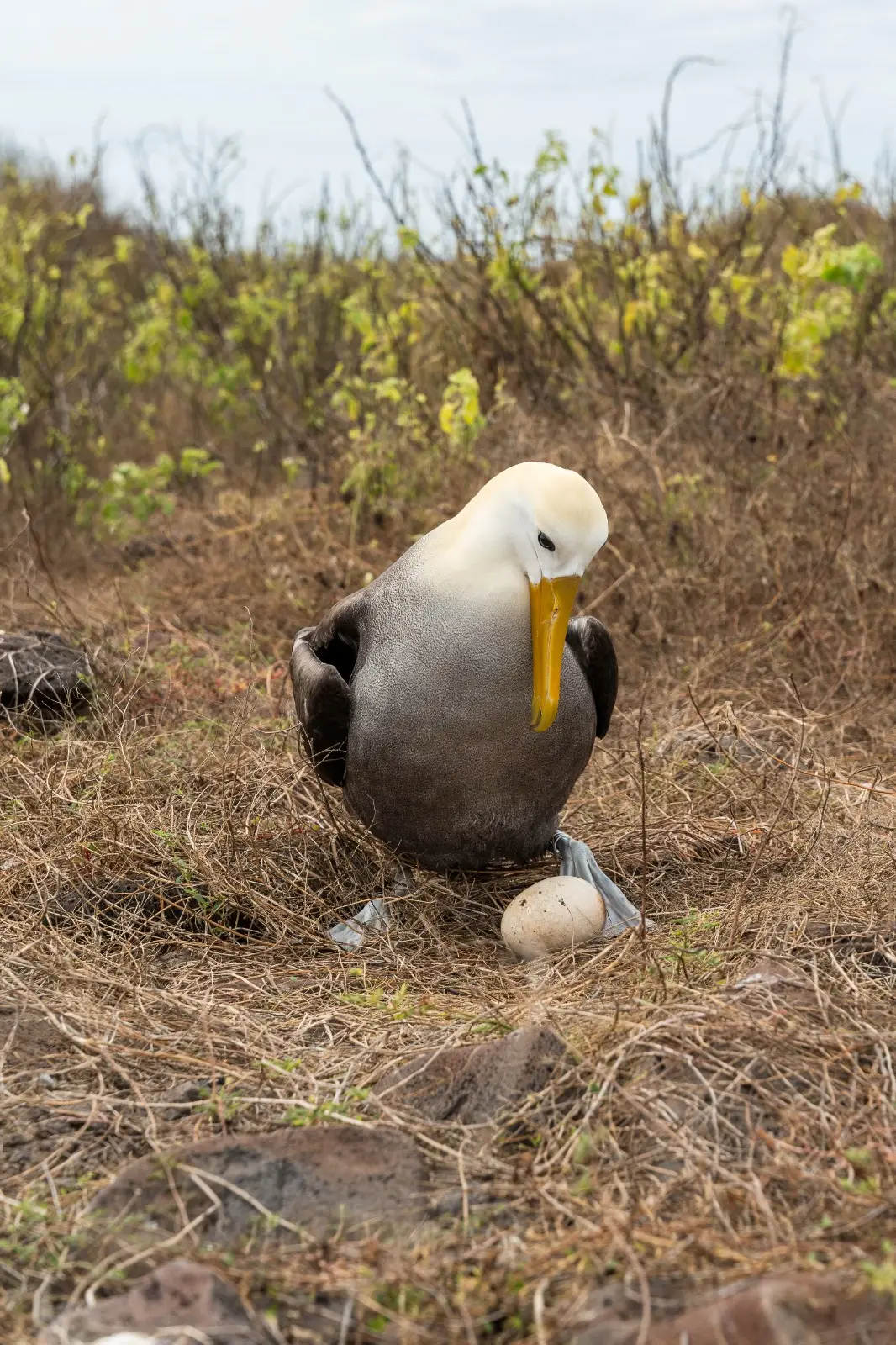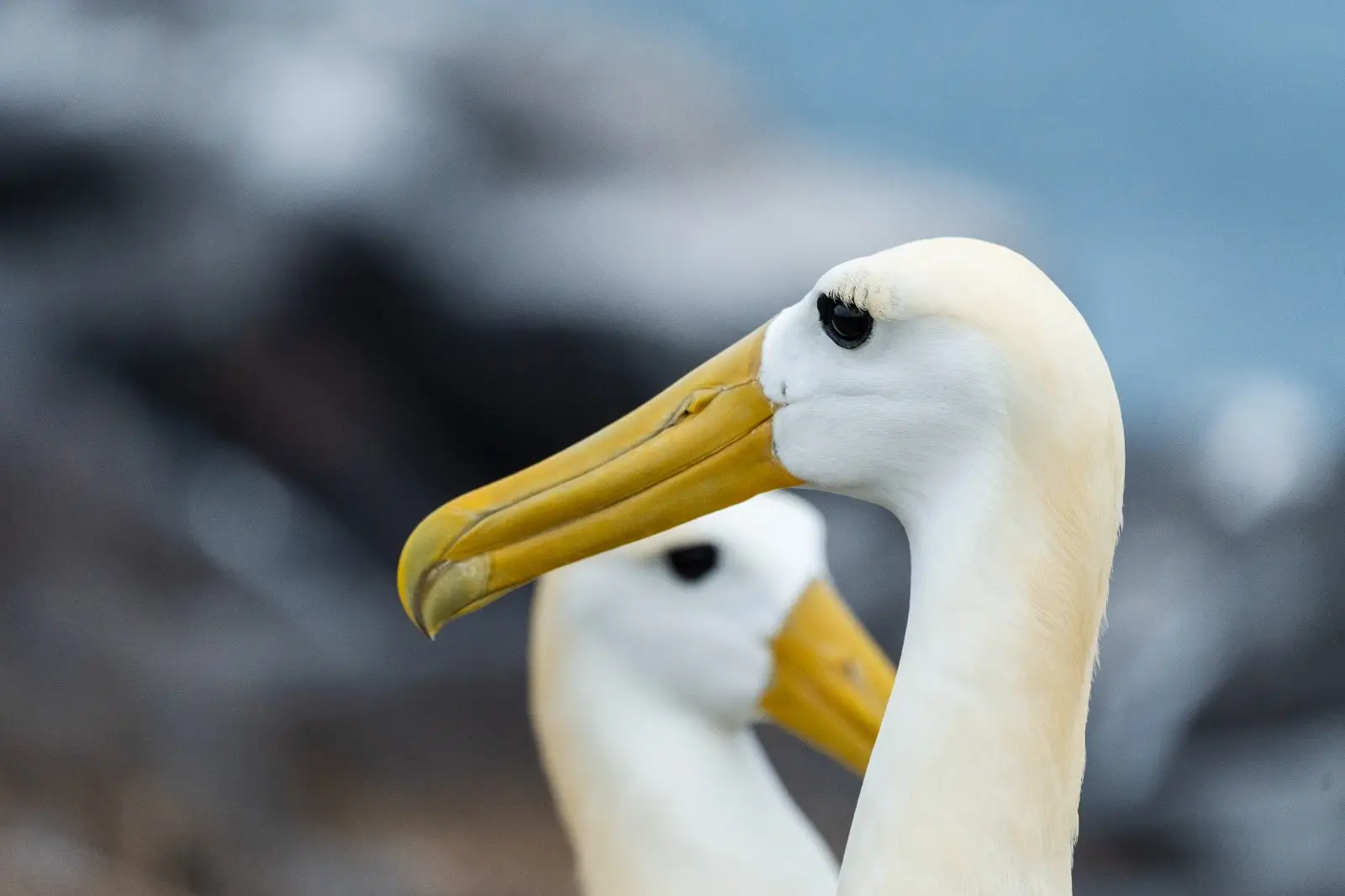


As part of the long-term monitoring program led by the Galápagos National Park Directorate and Fundación Jocotoco, a new expedition was carried out on Española Island between June 24 and 25 to fit breeding adult albatrosses with satellite transmitters.
During the expedition, 10 adult albatrosses were successfully fitted with satellite transmitters, and their movements will be monitored over the coming months.
Technology to Better Understand the Threats They Face
The new satellite transmitters are equipped with technology capable of detecting potential encounters between albatrosses and fishing vessels once the birds leave the Galápagos Marine Reserve to forage in the eastern Pacific.
These data will help identify areas where albatross flight paths overlap with fishing activities, providing valuable scientific evidence to better understand interactions with fisheries and support the development and implementation of measures to reduce the risk of incidental capture (bycatch).
Evidence of a Threat That Requires Continued Attention
Results from the previous monitoring season further highlight the importance of this work. Preliminary analyses suggest that several albatrosses tagged in December 2025 may have died following possible interactions with fishing activities. This hypothesis is based on analyses of their movement patterns, changes in flight activity, and the detection of encounters with fishing vessels outside the Galápagos Marine Reserve before transmissions from the tags were lost.
While additional data collection and analysis are needed to better understand the causes and assess the scale of this threat, these findings underscore the importance of strengthening monitoring efforts as the birds travel beyond the protected waters of Galápagos and of further investigating their interactions with fisheries.
Aunque se requiere continuar recopilando y analizando información para determinar con mayor certeza las causas y comprender la magnitud de esta amenaza, estos hallazgos resaltan la necesidad de fortalecer el monitoreo de la especie durante sus desplazamientos fuera de las aguas protegidas de Galápagos y profundizar el análisis de sus interacciones con las pesquerías.
Science to Inform Conservation
Satellite tracking is a fundamental tool for understanding the behavior of Galápagos albatrosses throughout their breeding cycle, identifying their foraging routes, and assessing the risks they face on the high seas.
The information generated through this work will strengthen management decisions and conservation strategies led by the Galápagos National Park Directorate, improving our understanding of the threats this species faces beyond the protected waters of the archipelago.
This expedition reflects the collaborative efforts of the Galápagos National Park Directorate and Fundación Jocotoco, with support from the Galapagos Conservation Trust (GCT) and the National Fish and Wildlife Foundation (NFWF), to generate scientific knowledge that strengthens the conservation of the Galápagos albatross and supports the long-term protection of one of the archipelago’s most iconic seabirds.