
Considered to be the “Green Oscars,” the Whitley Awards are one of the most important prizes for conservation globally. Sir David Attenborough has been an ambassador for the Whitley Awards for decades. The ceremony itself, held on April 29, 2026 at the Royal Geographical Society in London, was hosted by the patron of WFN, the Princess Royal of Britain.
At only 32 years old, winning the Whitley Award is an incredible accomplishment for such a young professional, and it punctuates an incredible year for Paola. In March of this year, she was selected as An Ocean Leader Fellow of the Sustainable Ocean Alliance x Donna Bertarelli Philanthropy program and completed her PhD at Arizona State University in the U.S.
Winning the Whitley Award reflects a collaborative effort between the Galápagos National Park Directorate, the Jocotoco team, and local community members, marking a turning point for conservation in the Galápagos. For centuries, much of the recognition for exploration, science, and conservation in the islands has gone to people from outside the archipelago. Originally from Santa Cruz Island in the Galápagos, Paola has developed her work deeply rooted in the territory. Since joining Jocotoco in 2023, Paola has continued to live and work in the Galápagos. Today, Paola and her team, all Galapagueños, are helping to reshape that narrative historically dominated by external actors.
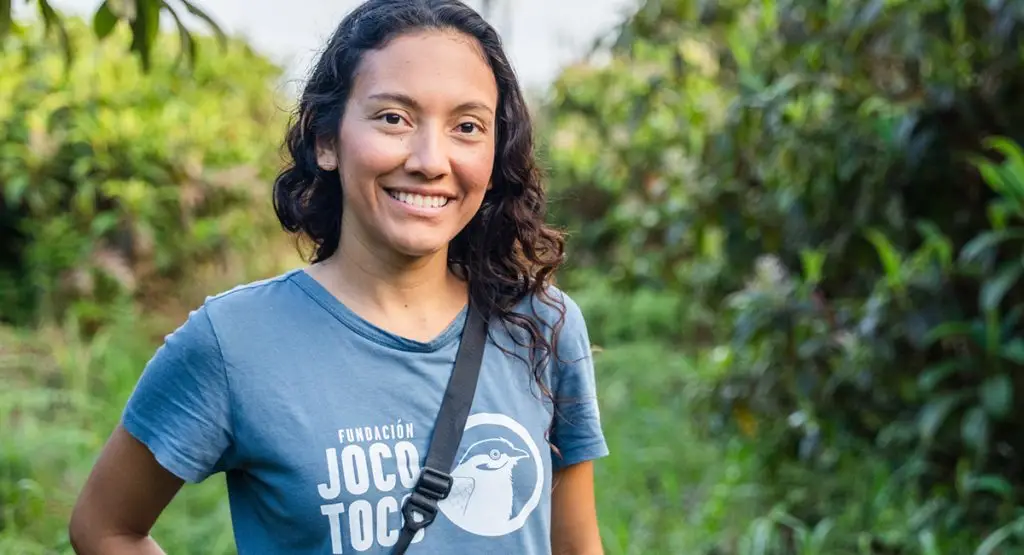
"I grew up in the Galápagos understanding that we are part of nature, not separate from it, and that connection has defined my life. Today, as I receive this recognition, I want to highlight not only the Galápagos Petrel - a unique and critically endangered species - but also the collective work of communities, park rangers, and our team to protect it. Just as the petrel connects ocean and land, it also reminds us that we are all connected, and that protecting biodiversity is a shared responsibility"
Dr. Paola Sangolquí.
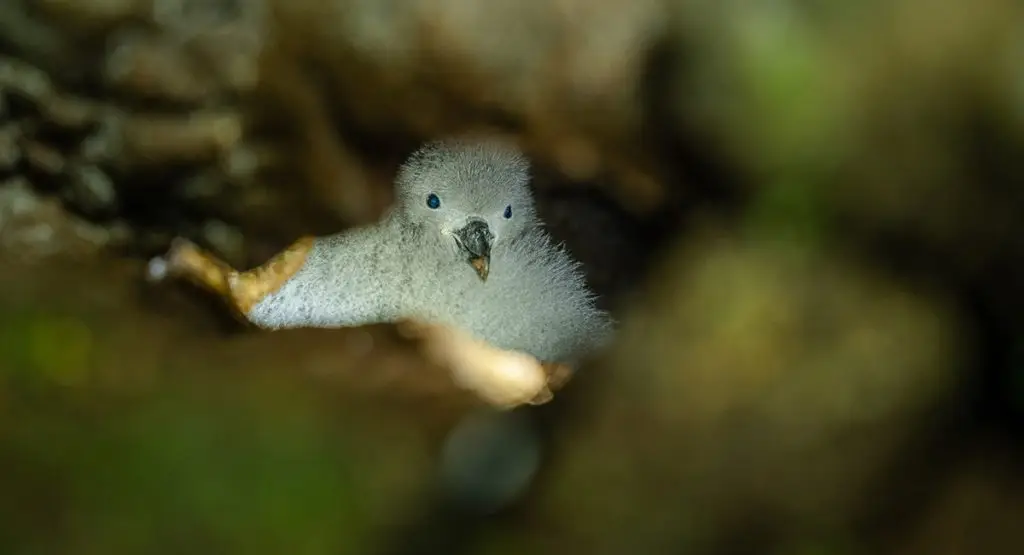
Endemic to the Galápagos Islands, the Galápagos Petrel spends most of its life at sea and returns to land only to nest in natural burrows. Its population remains fragile following a dramatic decline in the late 20th century, driven by invasive predators such as rats, as well as habitat degradation linked to agricultural expansion.
This award will support a conservation initiative focused on safeguarding nesting sites located on private lands in the highlands of Santa Cruz Island outside of the Galápagos National Park – an area that has historically received limited attention despite its importance for the species’ survival. Recent fieldwork has identified more than 70 previously undocumented active nests on private farms on Santa Cruz, highlighting the critical role that local communities play in conservation efforts beyond protected areas.
Through this project, Jocotoco, working in close coordination with the Galápagos National Park Directorate, will collaborate directly with local landowners to protect active nests, implement invasive species control, and strengthen long-term monitoring of those nests using camera traps.
In addition to on-the-ground conservation actions, the initiative will include environmental education programs and field visits with local schools, fostering a new generation of conservation stewards in the Galápagos.
By placing satellite tracking technology on adult petrels, the project also contributes to a broader understanding of the species’ ecology. Recent satellite tracking has revealed that petrels from different islands use distinct foraging areas across the Pacific, underscoring the need for tailored conservation strategies on each island.
Jocotoco and its community partners are leading similar work on other Galápagos islands. This includes San Cristóbal at Jocotoco’s own Los Petreles Reserve, as well as private farms surrounding the reserve.
"With this project, we are protecting the iconic Galápagos Petrel on private lands, using science and technology, with farmers and communities leading the process," "This project also demonstrates that conservation and livelihoods can go hand in hand. With reduced introduced rats, farmers' crops yields will increase, and predation of their chickens will decrease."
Dr. Paola Sangolquí.
"For our natural world to recover and thrive, the Whitley Fund for Nature invests in conservationists and communities rooted in the ecosystems they protect those who are already driving change. Paola's work, alongside her team at Fundación Jocotoco, highlights the fundamental role farmers play in protecting the Galápagos petrel - a critically endangered species that nests on their land. It was Paola's vision to inspire other island inhabitants to take action regarding the urgent need to save the petrel - which stands on the brink of extinction - that stood out and led her to win the Whitley Award"
Lisa Wheeler, Grants Director at the Whitley Fund for Nature.
"Conservation in Galápagos has historically focused on protecting species, often overlooking the human communities that live alongside them. This work demonstrates that it is possible to move beyond that model, recognizing that the ecological importance of species such as the Galápagos petrel is inseparable from our cultural identity and values, and that conservation can support - rather than compete with - local livelihoods. As a Galapagueña, it is especially meaningful to see approaches that recognize that those of us who call these islands home are not separate from conservation, but rather are essential to its present and its future"
Patricia Tapia Jaramillo, a young Galapagueña professional, community member, and part of the team that contributed to the initial phases of this project.
Recognition from the Whitley Award highlights the importance of integrating science, community engagement, and interinstitutional collaboration to address complex conservation challenges in island ecosystems. Paola is contributing to this new model of conservation, a model that can and should be replicated across Ecuador, Latin America, and indeed the rest of the world.
Read more about Poala’s inspiring journey HERE.