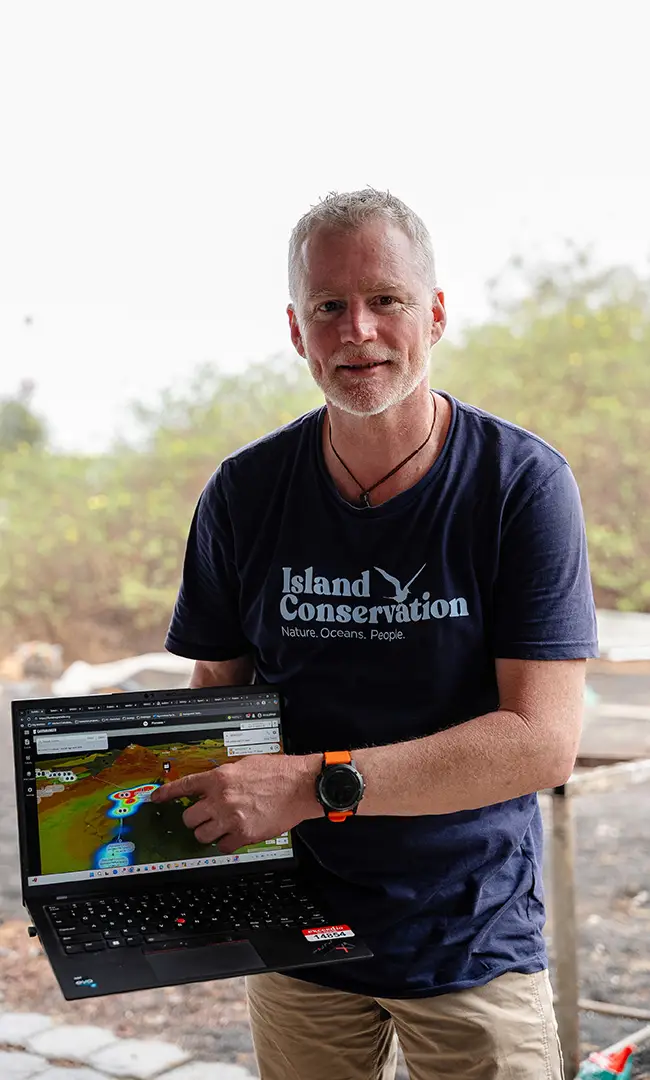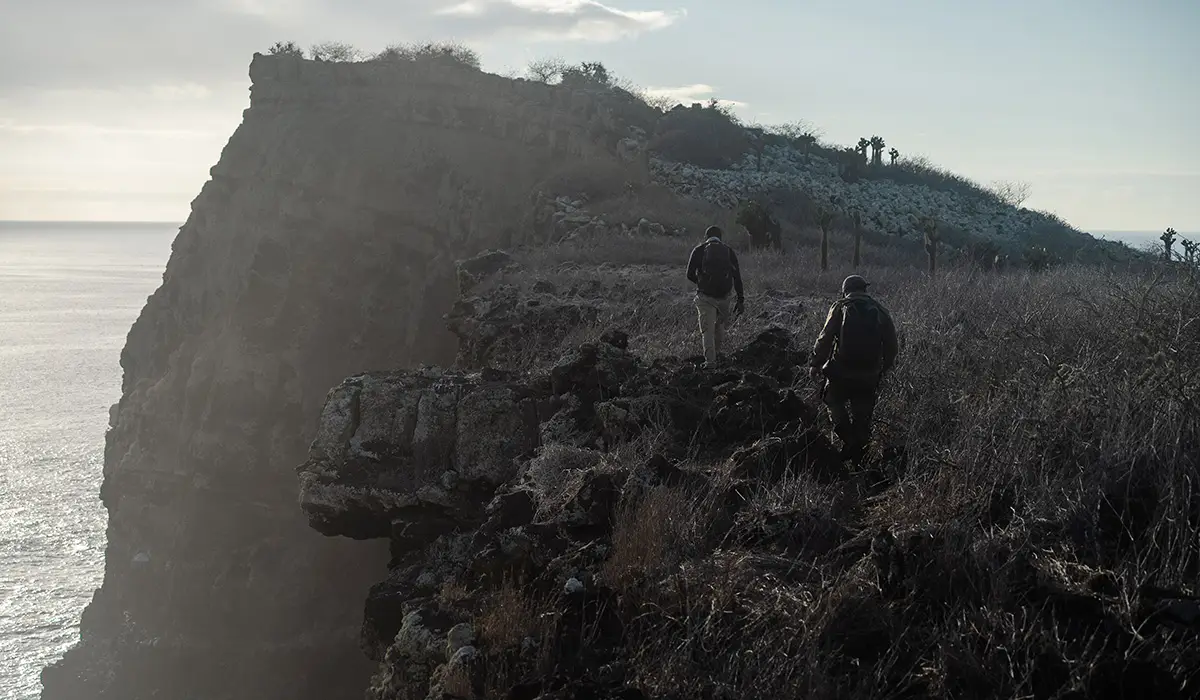

The Smart Island Monitoring system integrates an island-wide LoRaWAN Internet of Things (IoT) network, autonomous AI-enabled camera traps, smart traps, animal trackers, and real-time data visualization platforms. The result is an unprecedented ability to detect wildlife activity and inform conservation decisions instantly, even in rugged, inaccessible terrain.
Since the system was activated, it has captured and automatically reviewed more 250,000 images within the first 100 days, flagging 3,000 wildlife detections that required followup by conservation teams. By filtering out routine or empty footage, the technology has reduced the amount of manual monitoring work by 98%, saving the equivalent of 110 staff hours (~83 days of effort per year) that would otherwise have been spent reviewing images manually.
By replacing manual monitoring that once took weeks with automated alerts, the Smart Island Monitoring model shifts conservation from reactive to proactivetranslating timely data into ontheground action on Floreana, strengthening restoration in the Galapagos, and demonstrating a scalable approach to island conservation across the region and beyond.
Island Conservation leads the design and deployment of the Smart Island Monitoring system, while Fundación Jocotoco’s teams on Floreana are using these tools in the field to inform faster decisions and support ongoing restoration work across the island and archipelago.
"The implementation of the Smart Island Monitoring model on Floreana marks a strategic shift in how we support the management of ecological restoration in Galápagos"
Eliécer Cruz, Director of the Galapagos Program at Fundación Jocotoco.
"Access to real-time information allows us to make more informed decisions, optimize resources, and respond more effectively in the field. Innovations like this strengthen our commitment to restoring ecosystem functionality, in close coordination with authorities and the local community."
Eliécer Cruz, Director of the Galapagos Program at Fundación Jocotoco.
"This is a leap forward not just for Floreana, but for conservation across Latin America", "Smart Island Monitoring Systems allow us to bring cutting-edge tools into places where conservation has always been limited by distance, terrain, and available staff. The ability to understand what's happening in real time will fundamentally improve how we protect biodiversity in the Galápagos and beyond."
José Luis Cabello, Head of Operations in Latin America for Island Conservation.
The Smart Island Monitoring system was made possible through close collaboration with technology partners Wildlife Protection Solutions (WPS), Smart Parks, and EarthRanger. Together, these partners brought world-class tools and expertise to Floreana at a fraction of the cost and time that would normally be required to establish and maintain such a system. By sharing proven technologies and adapting them to local needs, the partnership helped overcome one of the biggest challenges in conservation: limited resources in remote places.
"The Galápagos must continue to consolidate itself as a living laboratory of innovation for conservation. These types of initiatives demonstrate that it is possible to integrate technology, cooperation and public management to strengthen the protection of fragile and unique ecosystems in the world. As the Government of Ecuador, we promote actions that not only improve environmental management in the territory, but also position Galápagos as an international benchmark in innovative solutions for the conservation of biodiversity"
Lorena Sánchez, Director of the Galapagos National Park.
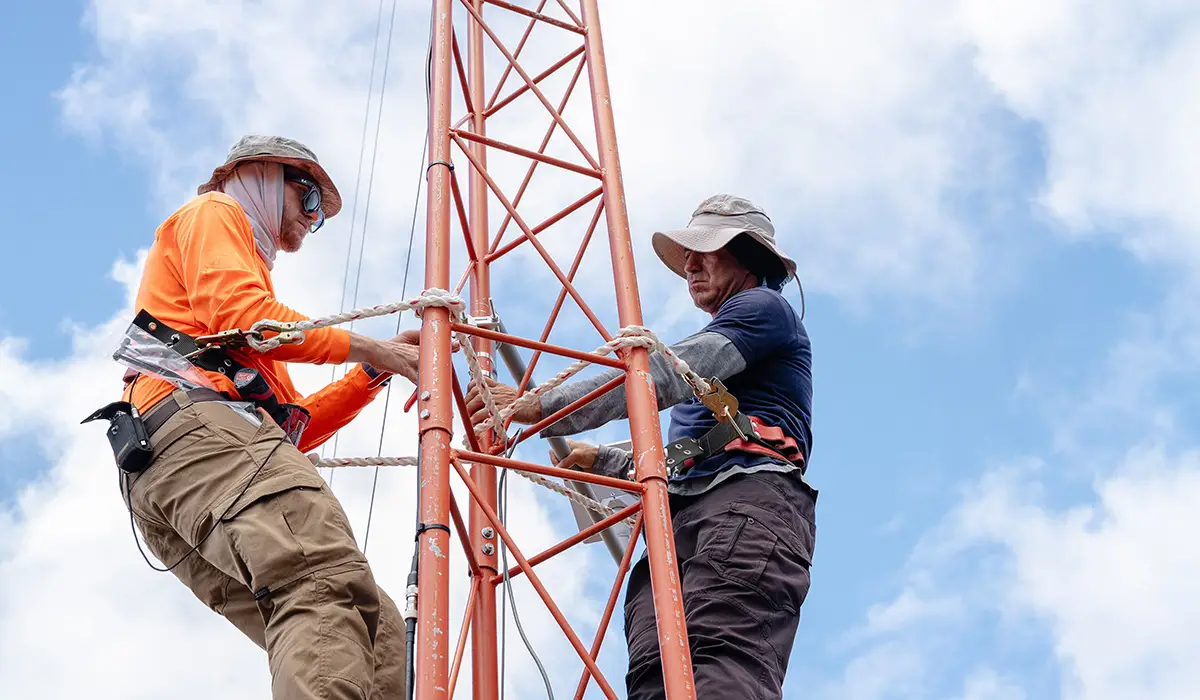
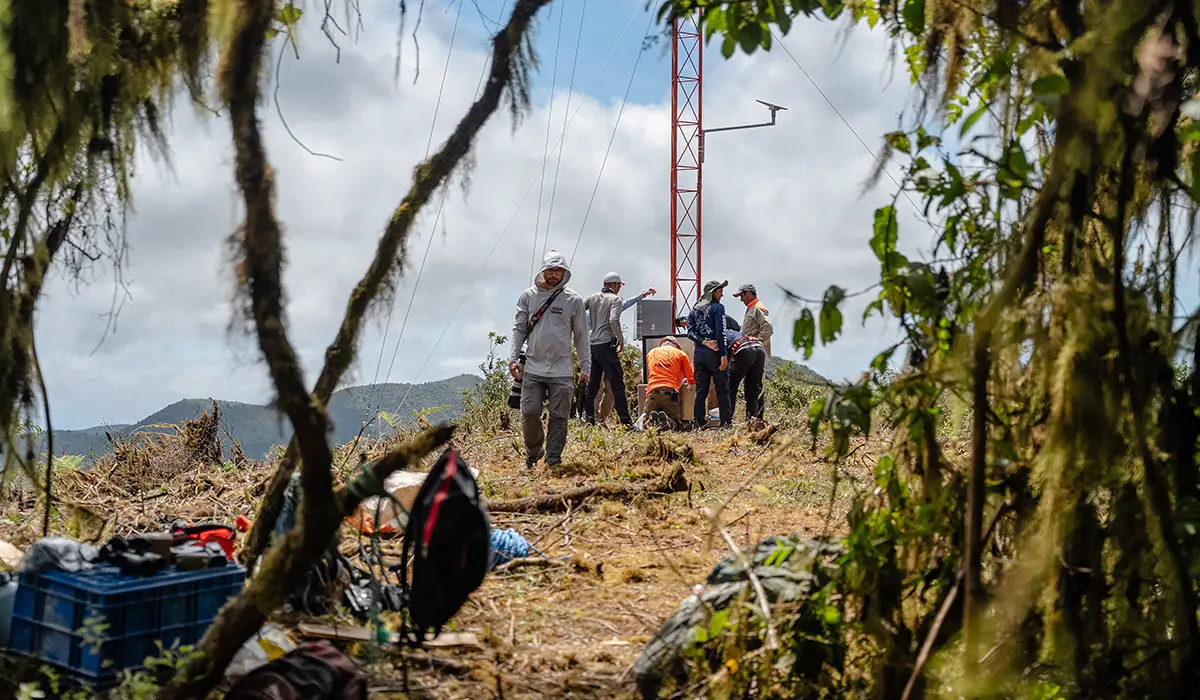
On an island like Floreana, where there is no cellular coverage, one of the main challenges was developing a connectivity system capable of operating in such remote conditions. The system includes two communication towersone grid-powered and one solar-powereddozens of camera traps, smart traps, and wildlife tracking sensors, all connected through satellite links. Working quietly in the background, these tools provide conservation teams with timely, actionable insights without adding complexity to their daily work.
"Through the diverse partnerships behind this initiative, we have combined operational experience with emerging technologies to quietly connect data and tools in the backgroundproviding rangers and island teams with clear, automated, actionable insights without adding complexity"
Doug Gillings, Innovation Manager at Island Conservation.
Already, the system has made it possible to map the movements of endemic species such as the Galápagos Short-eared Owl across the island and observe rare interactions between owls, frigatebirds, and marine iguanas. Observations like these would have required weeks of effort in the past, if they were possible at all. Now, they are captured automaticallyoffering new understanding of Floreana’s ecosystem and strengthening efforts to protect it.
"Smart Parks feels very much aligned with the mission of this Smart Island Monitoring initiative," "This pushes us to utilize and develop new technologies to the extreme."
Smart Parks representative.
With this solid foundation now in place, the Smart Island Monitoring system is designed to grow. The next phase will scale the network to support up to 450 cameras and more than 200 monitoring and tracking sensors. As automated spatial and AI-based analysis are added, clear data visualizations will help teams spot patterns sooner, plan interventions more strategically, and act with greater confidence.
The success of this initial deployment proves that real-time, island-wide intelligence is possible, setting the stage for faster, more effective restoration not just on Floreana, but on islands worldwide.