
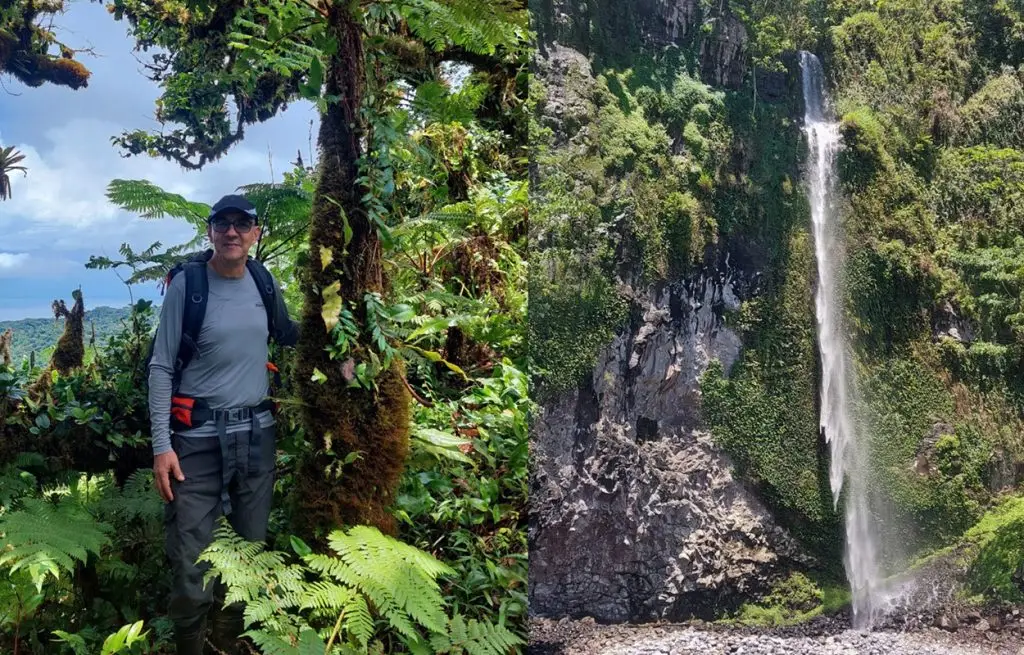
Thirty-five years ago, Juan arrived in the Galapagos as an agronomy student to complete his thesis and fulfill a year of rural service. What began as an academic chapter ultimately became a lifelong commitment to conservation. He first worked for the Galapagos National Park and later with several organizations dedicated to protecting the islands. Today, Juan is the Managing Director for Jocotoco’s Galapagos Program.
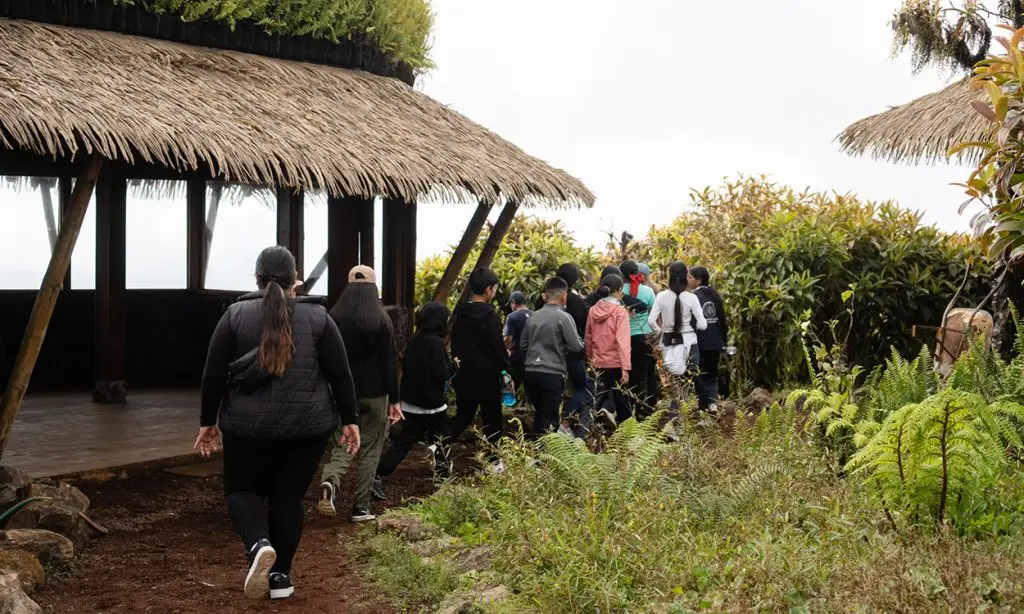
Over the last year, at Jocotoco’s Los Petreles Reserve in the wet highlands of San Cristóbal Island in the Galapagos, Juan oversaw the construction of visitor facilities. Those facilities are designed to minimize ecological impact on the land by collecting rainwater for use on the site, using solar water heaters for showers, and using solar panels to generate electricity. We inaugurated those facilities this April.
“The new visitor facilities are meant for students, researchers, and volunteers, allowing them to work at the reserve for longer periods of time,” says Juan. “We especially want to make this reserve more accessible for local school children, allowing us to train future generations committed to conservation.”
The Los Petreles Reserve is home to seven nesting colonies of the Critically Endangered Galapagos Petrel (Pterodroma phaeopygia). The petrels nest in burrows along steep and densely vegetated ravines. Juan led trail construction facilitating the monitoring of the petrel nests in the difficult terrain. Under Juan’s coordination, a specialized perimeter fence was built around the reserve to prevent the entry of livestock that degrade the humid forest and prey on petrel nests. Right now, Juan is leading the construction of a new plant nursery that will allow Jocotoco to restore endemic Scalesia forests, known as giant daisy trees, that have been nearly wiped out on San Cristóbal.
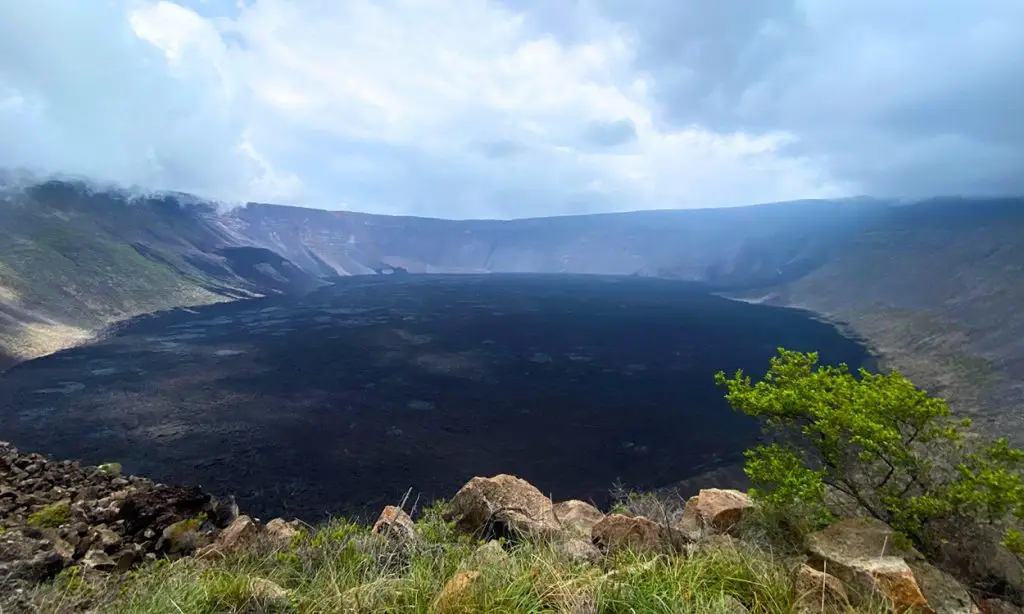
At the other end of the Galapagos, Juan helps build and maintain base camps on Wolf Volcano, the highest mountain on the archipelago. Here, Jocotoco is helping protect the Critically Endangered Pink Land Iguana (Conolophus marthae), one of the archipelago’s most threatened species. Walking to and from the iguana nesting sites in a single day is impossible, so the base camps are essential. Juan highlights a major milestone in this effort: “Because of invasive predator control to remove rats since 2022, conducted jointly with the Galapagos National Park Directorate and other institutions, newly hatched pink iguanas are surviving in the wild. This result gives us great hope that we can save this extraordinary species from extinction.”
One of the most challenging places where Juan works is Cocos Island off the Pacific coast of Costa Rica, regarded as one of the most biodiverse islands in the world. Many endemic plants and animals, including the only member of Darwin’s finches not found on the Galapagos, call Cocos Island their only home. Cocos Island is also one of the rainiest places on Earth. Here, Juan supports invasive species control. The island’s steep slopes are covered in dense rainforests. There are no formal roads. Walking paths consist of thick, slippery mud. Tracking down destructive and invasive animals, like introduced feral pigs, is extremely taxing but necessary to restore this ecosystem.
"My entire career I have supported conservation in some of the world's most unique places. These are places most people are never able to visit because of their remoteness and extreme conditions"
Juan
"While I have had the fortune to steward these places and their incredible wildlife, people from all walks of life, people like you, can also contribute to their protection."
Juan
You are part of this vision for the future. Your support strengthens scientific projects, helps control invasive species, and sustains conservation where there is still time to change the future for endangered species. Stories like Juan Chávez’s prove that long-term conservation delivers real results. Donate here.