


Between July 11 and 16, 2026, researchers from the University of Washington’s Center for Ecosystem Sentinels, Fundación Jocotoco, and the Galápagos National Park Directorate surveyed historical monitoring sites on Isabela, Fernandina, and Bartolomé islands and explored potential nesting areas on Floreana Island. This research is part of a long-term monitoring program conducted under research permits issued by the Galápagos National Park Directorate.
The expedition’s findings reveal signals associated with the persistence of unusually warm ocean conditions and reinforce the importance of continued monitoring of this endemic species.
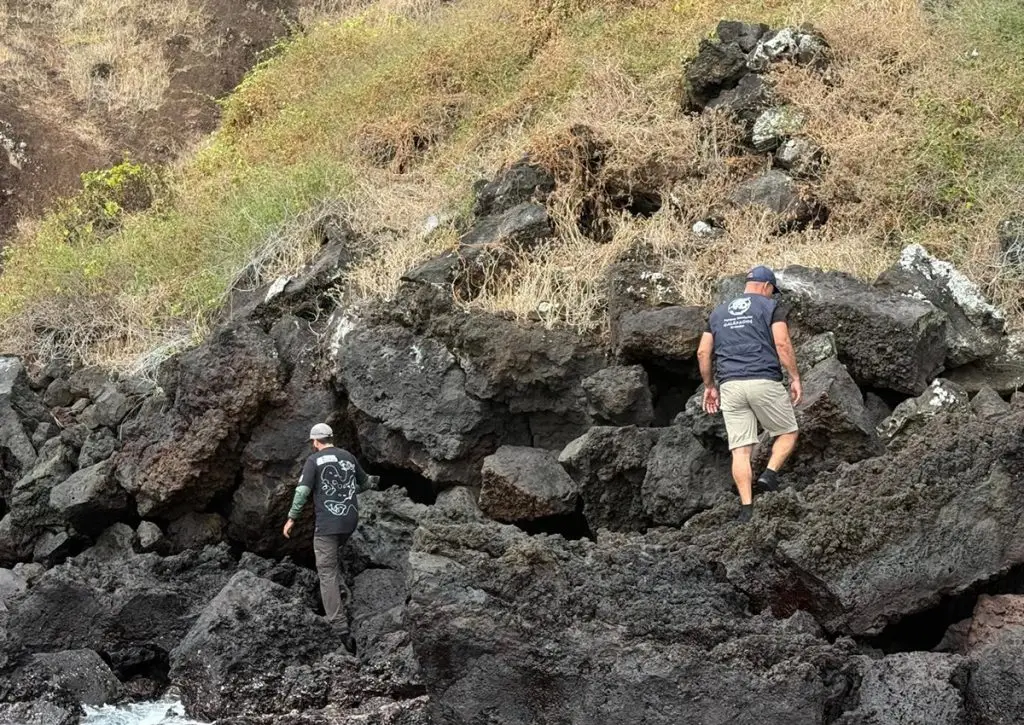
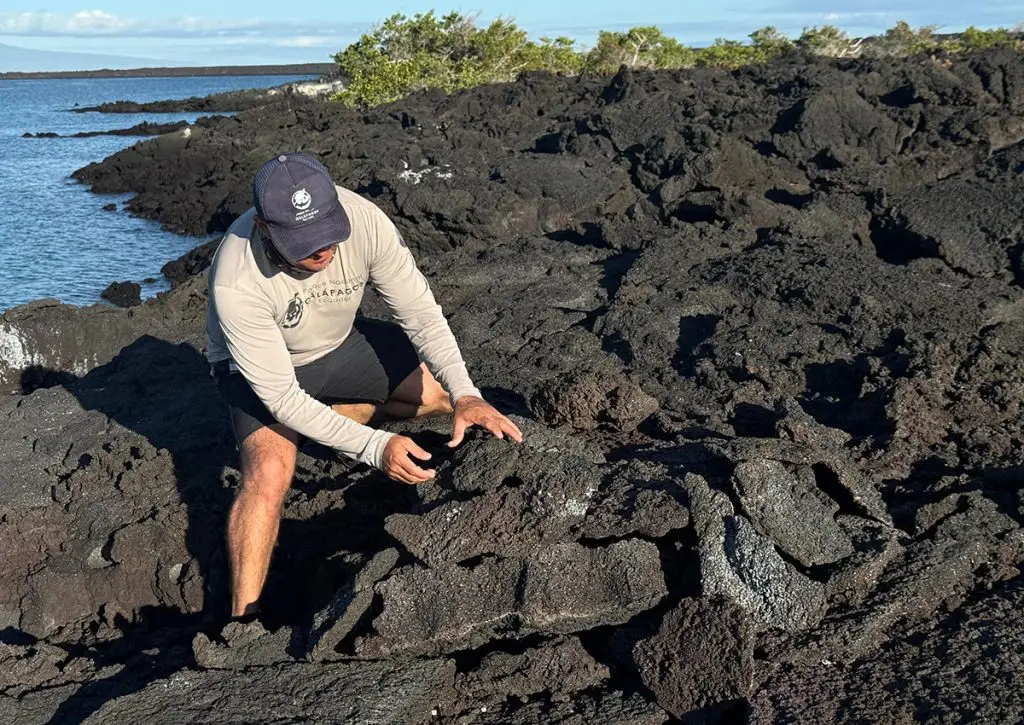
During the expedition, researchers inspected natural and artificial nests, assessed new potential breeding sites, and monitored individual penguins through banding, weighing, measuring, and photographic documentation to evaluate survival, body condition, molt, and population dynamics.
Key findings from the 2026 expedition
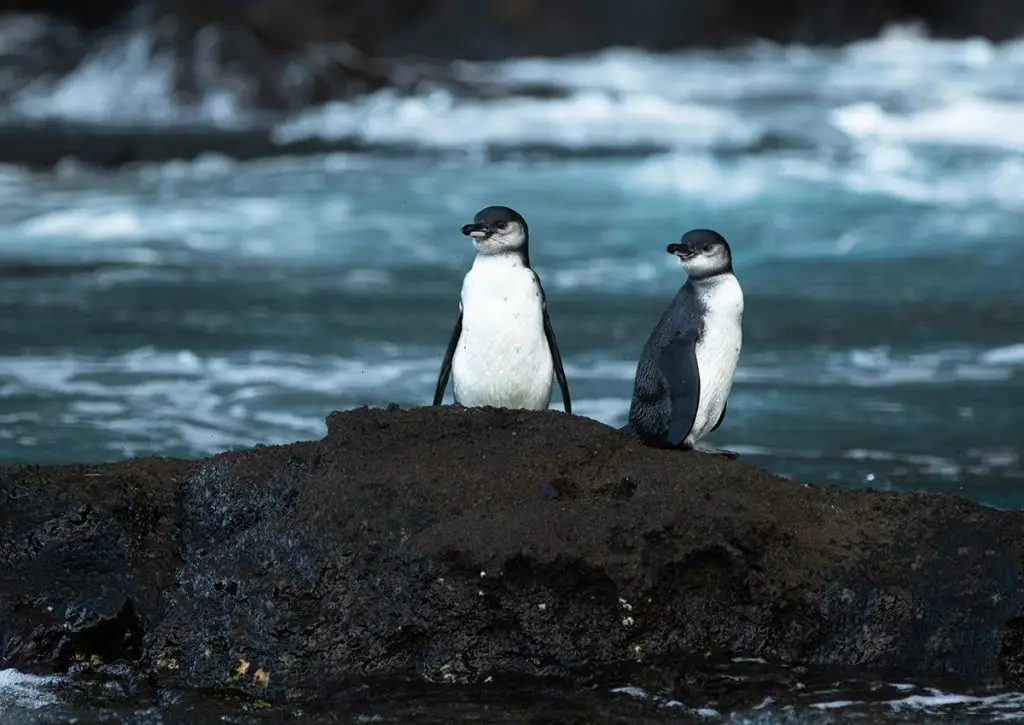
During coastal visual surveys, researchers recorded 41 penguins, all of them adults, with no juveniles observed. This contrasts with surveys conducted in July 2024 and 2025, when juveniles represented 1% and 3% of all individuals observed, respectively.
In parallel, the team measured, weighed, and photographed 48 penguins: 39 adults and nine juveniles. The juveniles encountered were older individuals, likely more than seven months of age. Their age, combined with the absence of younger juveniles and the lack of evidence of nesting activity, suggests that no successful breeding has occurred over approximately the past six months.
Overall, the adults were in good body condition, and 16 had recently completed molt. However, researchers found no penguins actively molting and no signs of nesting.
Water temperature averaged approximately 25°C (77°F), and observations of groups of penguins feeding were scarce. These findings are consistent with warm ocean conditions that may be affecting food availability. However, researchers caution that the effects of prolonged warm-water conditions do not necessarily become immediately evident in all individuals.
Juveniles: the first to show signs
The 2026 observations suggest that juveniles may be the first to exhibit the consequences of persistent warm waters and reduced food availability.
Although adults currently remain in good body condition, continued monitoring over the coming months will be essential. If warm conditions persist and fish availability declines, researchers may begin to observe changes in adults and in their ability to complete energy-demanding processes such as molting and reproduction.
The absence of successful breeding for approximately six months already represents an important warning sign. Changes in ocean temperature and productivity over the coming months will determine when favorable conditions for a new breeding season may return.
More than five decades documenting change
Three years ago, Fundación Jocotoco and the University of Washington, through the Center for Ecosystem Sentinels, joined forces to continue an extraordinary long-term research program on the Galápagos penguin.
Dr. Dee Boersma, Director of the Center for Ecosystem Sentinels, has studied this species for more than five decades and has documented its response to previous periods of extreme ocean warming, including the 1997 – 1998 El Niño event and the warm conditions recorded between 2015 and 2016.
This historical perspective makes it possible to interpret current observations within a much broader context. During prolonged periods of warm water, penguins may stop breeding and struggle to find enough food to complete molt and subsequently reproduce. Long-term monitoring allows scientists to recognize these signals and track their progression before impacts become evident across the entire population.
La Dra. Dee Boersma, directora del Center for Ecosystem Sentinels, ha estudiado esta especie durante más de cinco décadas y ha observado su respuesta frente a períodos anteriores de calentamiento extremo del océano, incluido El Niño de 1997-1998 y las condiciones cálidas registradas entre 2015 y 2016.
Esta perspectiva histórica permite interpretar las señales actuales en un contexto mucho más amplio. Durante períodos prolongados de aguas cálidas, los pingüinos pueden dejar de reproducirse y enfrentar dificultades para encontrar suficiente alimento, completar la muda para posteriormente reproducirse. El monitoreo de largo plazo permite reconocer estas señales y seguir su evolución antes de que los impactos sean evidentes en toda la población.
“Durante los años de observación de esta especie, me he dado cuenta de que los pingüinos de Galápagos son altamente resilientes al cambio y tienen una gran capacidad de adaptación. Además, tienen algo muy particular, son los únicos pingüinos que primero mudan su plumaje y luego se reproducen. En años calientes no mudan ni se reproducen, pero en años fríos la población se recupera, pueden reproducirse varias veces al año y criar dos pichones”. mencionó Dee Boersma, Directora del Center for Ecosystem Sentinels.
"Over the years studying this species, I have learned that Galápagos penguins are highly resilient and remarkably adaptable. They also have a unique life historythey are the only penguins that molt before breeding. During warm years, they neither molt nor reproduce, but in cooler years the population rebounds: they can breed several times a year and successfully raise two chicks"
Dee Boersma, Director of the Center for Ecosystem Sentinels.
Preparing safe nesting sites for when favorable conditions return
Monitoring goes beyond assessing the status of the population. It also seeks to ensure that penguins have suitable nesting sites available when ocean conditions once again become favorable.
During the 2026 expedition, researchers maintained several artificial nests at Punta Espinoza and evaluated potential nesting areas on Floreana Island. Several locations with potentially suitable nesting characteristics were identified and will continue to be monitored as restoration efforts and introduced predator control progress.
The availability of safe nesting sites is particularly important given the ongoing loss of nesting habitat. On the Marielas Islets, more than half of the natural nesting sites have disappeared over the past 50 years due to erosion. Maintaining and expanding the availability of high-quality, predator-free nesting habitat can help penguins take advantage of future windows of favorable ocean conditions for breeding.
"Conservation requires taking action today with both the present and the future in mind. Protecting and restoring safe nesting sites will allow Galápagos penguins to take advantage of future breeding opportunities when ocean conditions become favorable again"
Eliécer Cruz, Director of the Galápagos Program at Fundación Jocotoco.
Long-term science in a changing ocean
The Galápagos penguin depends on the cold, productive waters that sustain the fish on which it feeds. This dependence makes the species especially vulnerable to prolonged changes in ocean conditions.
The 2026 findings are not an isolated snapshot. Their value lies in being compared with decades of systematically collected data from the same monitoring sites. This continuity allows researchers to detect changes in reproduction, individual condition, and population structure while generating information that directly informs conservation decisions.
The continuity of this monitoring effort has also been made possible through new forms of collaboration. Over the past three years, Silversea, through its expedition ship Silver Origin, has provided a logistical platform that enables scientists to efficiently access several historical study sites throughout the archipelago and maintain systematic data collection. This partnership demonstrates the potential of collaborations among science, conservation, and tourism to leverage existing resources, facilitate long-term research, and create new opportunities that benefit the conservation of the Galápagos Islands.
"At Silversea, we believe that conserving the Galápagos is only possible through strong partnerships and a shared commitment to its future. For the third consecutive year, we are proud to provide the logistical support that allows scientists to access key research sites, monitor, and protect one of the archipelago's most iconic species while generating essential knowledge for its long-term conservation. As strategic partners of the scientific community and our conservation partners, we reaffirm our commitment to actively contributing to the protection of this unique natural heritage"
Gabriela Naranjo, Regional Director of Royal Caribbean Group.
The research and monitoring project is conducted under research permits issued by the Galápagos National Park Directorate, with the participation and support of the institution’s park rangers.